


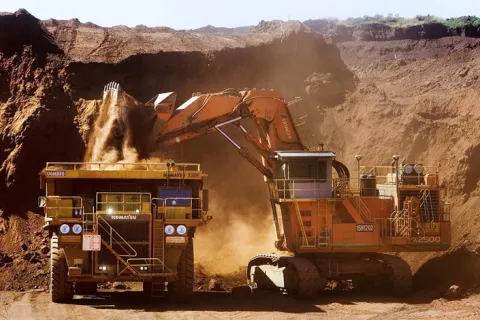
Guinea has emerged as one of the world’s most strategic mining destinations, driven by vast reserves of bauxite, iron ore, gold, and diamonds. The mining industry has become the backbone of the country’s economy, attracting billions of dollars in foreign investment and positioning Guinea as a key supplier of minerals essential to global industrial development and the energy transition.
Guinea’s Mineral Wealth
Guinea possesses some of the richest mineral deposits in Africa. The country is estimated to hold among the world’s largest reserves of bauxite, the primary ore used to produce aluminum. Major bauxite-producing regions include Boké, Boffa, Télimélé and Kindia, where large-scale operations have significantly increased production over the past decade.
Beyond bauxite, Guinea’s untapped iron ore resources—particularly the giant Simandou Iron Ore Project—have attracted global attention. The project is considered one of the world’s largest high-grade iron ore deposits and could transform Guinea into a major exporter of iron ore once full production begins.
Gold mining also contributes to Guinea’s mineral output, with operations concentrated in Siguiri, Mandiana, Kouroussa and Dinguiraye. Artisanal mining remains widespread, supporting thousands of livelihoods but raising environmental and safety concerns.
Diamond deposits, though smaller in economic importance today than in previous decades, continue to provide income for local communities and small-scale miners, particularly in Banankoro, Kérouané Prefecture.
Bauxite Production Drives Economic Growth
Over recent years, Guinea has become one of the leading exporters of bauxite globally —183 million tons exported in 2025, supplying key markets in Asia and beyond. Increased demand for aluminum—used in construction, transportation, and renewable energy technologies—has boosted investment in Guinea’s mining infrastructure.
Mining companies have invested heavily in railways, ports, and logistics corridors to support exports. These developments have improved connectivity in some regions and created employment opportunities.
However, analysts note that exporting raw minerals alone limits long-term economic benefits. There is growing discussion about developing local refining and alumina processing industries to capture more value domestically. Recently, Guinea signed a
$1.68 Billion agreement with Chalco Alumina to establish a Refinery in Boffa, advancing its downstream ambitions.
Local beneficiation could create jobs, expand industrial capacity, and increase government revenues.
The Strategic Importance of Simandou
Simandou Iron Ore Project remains one of the most closely watched mining developments worldwide. Once operational at scale, the project could significantly alter global iron ore supply chains.
Its development includes major infrastructure requirements, including rail transport and port facilities, potentially reshaping Guinea’s economic landscape.
Supporters view the project as a catalyst for modernization, while observers emphasize the importance of transparency, political stability, environmental safeguards, and equitable distribution of economic gains.
Challenges Facing the Sector
Despite strong growth potential, Guinea’s mining sector faces persistent challenges.
Infrastructure Constraints
Many mineral-rich regions require improved roads, power supply, railways, and water infrastructure. Limited infrastructure increases operational costs and can delay project development.
Environmental Concerns
Mining activities may contribute to deforestation, dust emissions, land degradation, and water pollution when environmental controls are insufficient. Communities near mining zones often raise concerns about agricultural land loss and ecosystem impacts.
Strengthening environmental monitoring and enforcing rehabilitation requirements remain important priorities.
Community Relations
Social acceptance increasingly influences mining project success. Local populations expect tangible benefits including employment, education, healthcare, and infrastructure improvements.
Failure to address community expectations can contribute to tensions between operators and residents.
Governance and Transparency
Investors closely monitor regulatory stability, permitting processes, and governance standards. Transparent revenue management and consistent mining policies are considered essential for sustainable sector growth.
Growing Focus on Sustainability
Global demand for responsibly sourced minerals is encouraging mining companies to adopt stronger environmental, social, and governance (ESG) practices.
In Guinea, sustainability discussions increasingly include:
- Mine rehabilitation programs
- Water management strategies
- Reduced carbon emissions
- Local workforce development
- Community investment initiatives
- Responsible supply chain practices
Companies demonstrating strong ESG performance may gain competitive advantages in international markets.
Outlook: A Transformative Decade Ahead
Guinea’s mining industry stands at a critical moment. Expanding bauxite production, advancing iron ore projects, and increasing international investment could accelerate economic growth over the coming decade.
Yet long-term success will depend not only on mineral extraction volumes but also on how effectively revenues support infrastructure, education, industrialization, and local development.
If managed strategically, Guinea’s vast mineral resources could become a foundation for broader economic transformation rather than solely an export-driven industry.
For investors, policymakers, and mining stakeholders, Guinea remains one of Africa’s most important mining frontiers—offering significant opportunities alongside equally important responsibilities.