
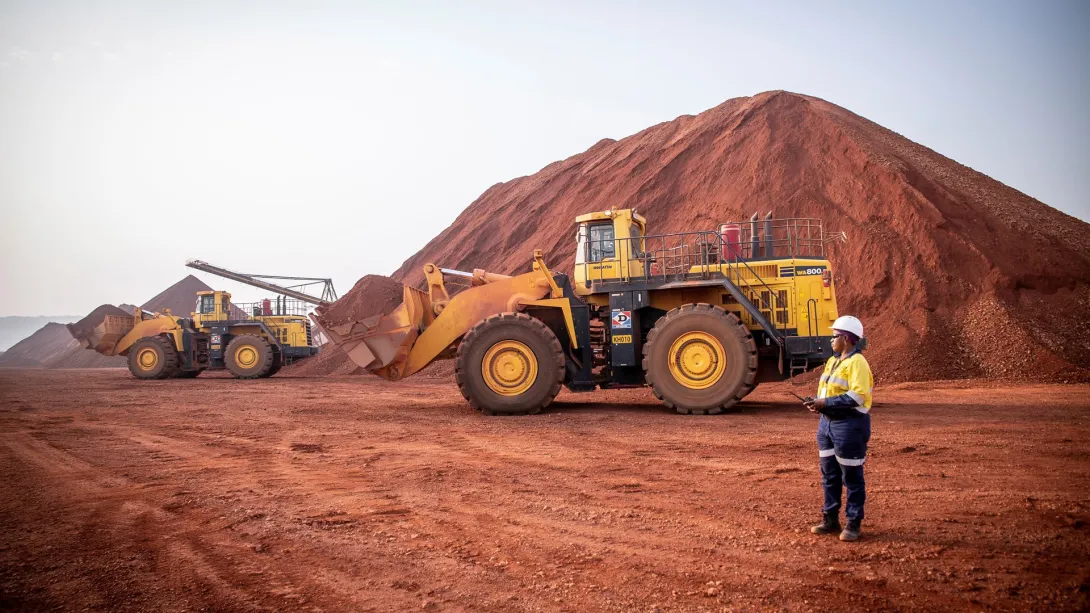
The Guinea Alumina Company (GAC) Boké Bauxite Mine and Infrastructure Project represents one of the most ambitious and comprehensive mining developments undertaken in the Republic of Guinea in recent decades. Developed by Emirates Global Aluminium (EGA) through its subsidiary Guinea Alumina Corporation, this $1.4 billion venture has transformed Guinea's mining landscape, creating a fully integrated bauxite extraction and export operation that connects inland deposits to global markets through purpose-built infrastructure spanning mine, rail, and port facilities.
Strategic Location and Resource Base
Located in the Boké region of northwestern Guinea, approximately 75-90 kilometers from the Atlantic coast, the project sits at the heart of one of the world's richest bauxite-producing corridors. GAC's mining concession covers an expansive 690 square kilometers between the towns of Sangaredi and Boké, containing approximately 400 million tonnes of bauxite mineral resources. The deposit boasts proven and probable reserves of 236.8 million tonnes grading 46.5% Al2O3, making it a premium source of high-quality bauxite ore—the essential raw material for aluminum production.
The geological advantages of the Boké region are significant: bauxite deposits are found at or near the surface, enabling efficient extraction through conventional open-pit mining methods. This surface accessibility reduces operational complexity and costs while maintaining the high-grade quality demanded by international alumina refineries and aluminum smelters.
Mining Operations
GAC operates a sophisticated 24-hour, 365-day mining operation designed to extract and process 12 million tonnes of bauxite annually. The mining process begins with drill operators creating 140-millimeter blast holes according to predetermined plans. These holes are loaded with explosives and detonated to fragment the bauxite-bearing rock. Excavators then load the broken ore onto heavy-duty production trucks, which transport the material to on-site crushers.
The crushing process reduces bauxite to less than 100 millimeters, facilitating easier handling and transportation. Crushed bauxite is conveyed at a rate of 2,500 tonnes per hour to a rail-mounted stacker, which feeds two parallel stockpiles, each with a 165,000-tonne capacity. These strategically positioned stockpiles, located adjacent to the railway track, serve as the critical interface between mining operations and the transportation network, ensuring continuous supply to the rail system.
Railway Infrastructure
A cornerstone of the GAC project is its extensive railway component, which bridges the 90-kilometer gap between mine and port. The project included upgrading the existing 134-kilometer single-track mainline railway from the CBG (Compagnie des Bauxites de Guinée) operations in Sangarédi, along with constructing 27.7 kilometers of new track. GAC built rail spurs and loops to connect with existing railway lines shared by other mining companies, creating an integrated transportation network that benefits the entire regional mining sector.
The operational scale is impressive: each ore train consists of three locomotives pulling up to 150 wagons, with each wagon capable of carrying 86 tonnes of ore. Fully loaded trains transport approximately 12,900 tonnes of bauxite per journey—equivalent to the weight of the Eiffel Tower. The loading process, executed by a fleet of four front-end loaders, achieves remarkable efficiency, taking less than two minutes per wagon. The three-hour journey to the coast operates on a carefully coordinated schedule to maintain continuous flow from mine to port.
Port and Export Facilities
At Kamsar, near the mouth of the Rio Nunez river, GAC constructed a state-of-the-art port terminal designed for maximum efficiency. The facility features a sophisticated car dumper that upends and unloads two wagons simultaneously while they remain connected to the train, completing the entire unloading process in under three hours. A 2.7-kilometer marine trestle extends into deeper water, supporting the cargo handling infrastructure.
The port's storage area accommodates 1.3 million tonnes of bauxite and is equipped with a powerful stacker-reclaimer capable of moving 4,500 tonnes per hour. A complex network of underground and overhead conveyors transports bauxite to a barge loader at the end of a 1.5-kilometer jetty. With a loading capacity of 5,000 tonnes per hour, the system fills each of four 13,000-tonne self-propelled barges operated by EGA in less than three hours.
The barges then transport bauxite to EGA's transshipment location 37 kilometers offshore in deeper water, enabling the use of Capesize vessels—massive ocean-going ships approximately 300 meters long, 50 meters wide, and capable of carrying 180,000 tonnes of bauxite. At the transshipment point, two floating cranes equipped with clamshell grabs, moored on either side of the export vessel, directly transfer bauxite from barges to ships. Loading a single Capesize vessel takes approximately four-and-a-half days.
Supporting infrastructure at the port includes a water desalination plant, fuel handling facility, power generation facility, and maintenance workshop, creating a self-sufficient operational hub capable of continuous year-round operation.
Economic Impact
Beyond its operational achievements, the GAC project has served as a catalyst for economic transformation in Guinea. The development created 14,000 direct and indirect jobs spanning various skill levels, from mining and blasting operations to railway management, port operations, and administrative functions. This employment generation created multiplier effects throughout local and national economies, supporting communities along the entire Sangaredi-Kamsar corridor.
The infrastructure improvements, particularly the railway upgrades, provided enhanced transportation capacity benefiting other mining companies and communities, facilitating broader regional economic development. GAC's commitment to maximizing local economic benefits extended to procurement opportunities and community development programs.
Commercial bauxite exports commenced in August 2019, marking Guinea's successful entry into large-scale, modern bauxite production and export. GAC's output—representing approximately 2-3% of global bauxite supply—predominantly served third-party customers, with some material shipped to EGA's Al Taweelah alumina refinery in Abu Dhabi.
Current Conflict and Expropriation
The GAC project's promising trajectory came to an abrupt and contentious end in 2025. The conflict between GAC and Guinea's government began in October 2024 when authorities suspended the company's bauxite exports and mining operations. The dispute centered on Guinea's regulatory requirement that mining firms present plans to build local alumina refineries—a policy reflecting the military government's broader strategy to capture more value from mineral resources through domestic processing rather than exporting raw materials.
On August 5, 2025, Guinea revoked GAC's concession entirely, citing violations of the mining code. According to a government decree, the 690-square-kilometer concession containing 400 million tonnes of bauxite resources was immediately transferred "free of charge and without any compensation" to Nimba Mining SA, a newly created state-backed firm. This action constituted what EGA characterized as "illegal expropriation" and a "flagrant violation" of GAC's contractual and legal rights.
EGA strongly denounced the decision and announced plans to seek redress through international tribunals and other legal channels. For several weeks, GAC attempted to negotiate a safe and orderly handover while reserving all legal rights, but Guinean authorities continued acting unilaterally. On August 22, 2025, EGA announced that GAC would definitively terminate all activities, completing an orderly wind-down of employee contracts and service provider agreements. At midnight on August 23, 2025, the Republic of Guinea assumed exclusive responsibility for operations and security of all facilities, infrastructure, equipment, and materials.
This expropriation exemplifies a broader regional trend: military governments across West Africa—including Mali, Niger, and Burkina Faso—have intensified efforts to reclaim control over strategic mineral assets and secure more favorable terms from foreign mining companies. For Guinea, the world's second-largest bauxite producer, the move signals determination to advance domestic refining capacity and maximize resource revenues, even at the cost of established international partnerships and potential legal liabilities in international arbitration.