


Mines Minister "Volume reductions are imminent as margin pressure mounts across the sector."
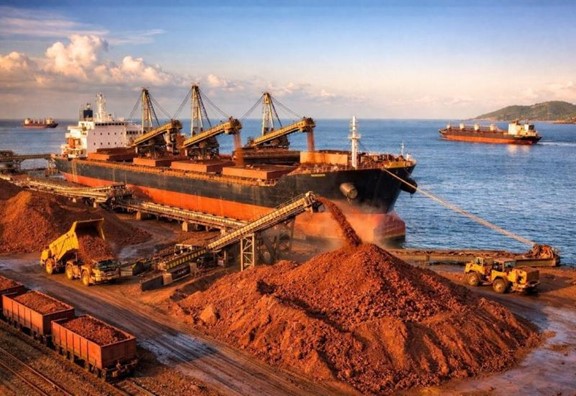
Guinea's Ministry of Mines has confirmed it will reduce bauxite export volumes by early April 2026, in a move designed to shore up prices and protect smaller producers facing an increasingly challenging operating environment. Mines Minister Bouna Sylla made the announcement on Wednesday, stressing that the measure falls short of an outright export ban but will constitute a meaningful reduction in shipment volumes across the sector.
"It's not really a quota, but we will reduce the volumes we export," Sylla told Reuters, offering the clearest signal yet that Conakry intends to exercise supply-side discipline over the world's largest bauxite-producing nation.
The backdrop to the decision is a deteriorating margin environment that has placed particular strain on smaller mining operators. Bauxite prices have declined between 20% and 35% from their 2025 highs, with benchmark cargoes from Guinea and Australia now trading in the $60–$70 per tonne range. Compounding the price weakness, freight costs have risen sharply due to ongoing conflict in the Middle East, squeezing producer revenues from both ends of the cost structure.
Guinea's export volumes surged 25% to 183 million metric tonnes in 2025, and analysts had projected shipments approaching 200 million tonnes in 2026 — a trajectory the government now appears determined to interrupt. Approximately 70% of Guinea's exports are destined for Chinese refineries, leaving the country's revenue base heavily exposed to fluctuations in Chinese demand.
For smaller producers, the combination of lower realisations and higher logistics costs raises the spectre of insolvency, with knock-on consequences for employment, host communities and government revenues. Guinea channels 0.5% of mining company revenues into local development funds, meaning sustained price weakness would directly erode financing for schools and infrastructure in mining-affected areas.
In a parallel process, the government has requested that all bauxite producers submit three-year production plans, which are being reviewed prior to the finalisation of sector-wide curbs. Sylla indicated that the review would be completed before the end of March or in early April, following consultations with the industry.
The production plan requirement carries a strategic dimension beyond immediate price management: the government is using the process to assess whether actual output and investment in railways, ports and refineries are consistent with the commitments made at the time mining licences were granted. This signals a broader intent to enforce licence conditions and align operational performance with promised capital deployment.
The fiscal picture is nuanced. While lower bauxite prices have weighed on corporate income tax receipts, aluminium prices — now trading above $3,000 per tonne — have supported royalty revenues, partially offsetting the shortfall. Sylla acknowledged the tension between producer sustainability and state revenue maximisation, framing the curbs as a shared interest: "We want more revenue, and they want more sustainable operations."
Market analysts have flagged potential downside risks to the strategy. Tom Price, head of commodities at Panmure Liberum, cautioned that supply restriction attempts could backfire, noting that Guinea's export interventions in 2024 demonstrated how price-sensitive the market can be. More structurally, sustained use of supply controls risks positioning Guinea as an unreliable supplier, potentially dampening longer-term demand from international buyers.
Guinea accounts for over 40% of global bauxite supply, giving Conakry significant leverage — but also significant responsibility — in managing market expectations. How the government calibrates the depth and duration of the forthcoming curbs will be closely watched by producers, refiners and commodity markets alike.
Share on social media

-