
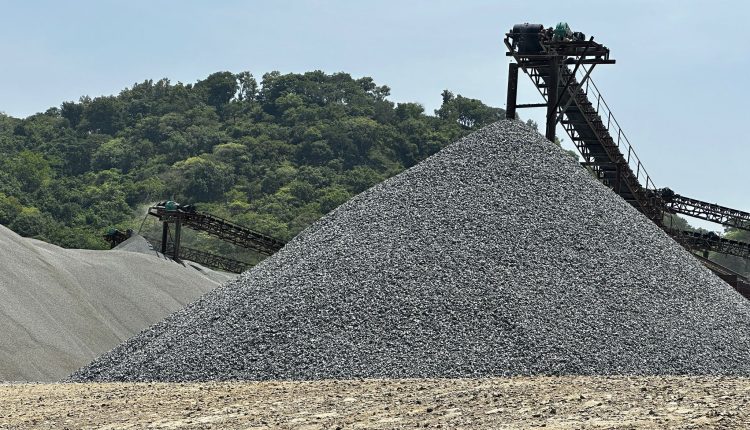
The Government of Guinea has cancelled 41 quarry exploitation permits across the country, marking a significant regulatory move aimed at strengthening governance in the mining cadastre and reopening dormant areas to new investment.
The decision was formalized through a ministerial order issued by the Ministry of Mines and Geology and made public on March 10, 2026, via national television. The measure affects both domestic and international operators involved in the extraction of construction materials, including dolerite, granite, sand, and laterite.
Regulatory enforcement and legal basis
Authorities justified the cancellations on the grounds of non-compliance with Guinea’s mining legislation, primarily due to the expiration of permits that had not been renewed or properly maintained by the operators.
The order cites several provisions of the Guinean Mining Code—specifically Articles 3, 61, 77, 82, 88 and 89—along with the 2014 decree governing the management of mining titles. It also references the 2021 law regulating quarry activities and the 2022 local content legislation.
Taken together, these legal frameworks provide the government with the authority to withdraw titles that are inactive, expired, or not operated in accordance with contractual obligations.
According to the ministry, the revoked licenses automatically revert to the state’s mining portfolio, enabling the authorities to reassess and potentially reallocate the areas to operators capable of meeting regulatory and operational requirements.
Granite operations most affected
Granite quarry operations account for the majority of revoked titles. More than twenty permits linked to granite extraction were cancelled, affecting a wide range of companies.
Among the companies listed are Simfer S.A., Guinea Crown Mining Company, Tudor S.A.R.L., Granitor S.A.R.L., and several entities affiliated with Guiter Mining. Some of the permits dated back nearly a decade, with expiration dates ranging from 2017 to 2023.
The cancellation of these titles reflects what industry observers describe as a broader effort to eliminate “passive occupation” of quarry concessions—situations where operators hold titles without undertaking active development or production.
Dolerite and construction materials sector impacted
The clean-up also affects the dolerite segment, an important source of crushed stone for road construction and infrastructure projects.
Companies such as Bel Air Mining S.A., Chine-Afrique Business S.A.R.L., Shanghai P.U. Zen S.A.R.L., and DCE Construction S.A.R.L. saw their permits withdrawn after expiration periods ranging from 2018 to 2022.
Several Chinese-linked contractors active in Guinea’s construction sector were included in the list, highlighting the government’s intent to enforce the same regulatory standards across both domestic and foreign operators.
Sand and laterite permits also revoked
In addition to hard-rock quarries, permits related to sand and laterite extraction were also cancelled. These materials are widely used in civil engineering and road construction projects across the country.
Among the affected companies are China Road and Bridge Corporation (CRBC), Sakon Construction S.A.R.L., Agacete S.A.R.L., Guinée Original Co. Ltd S.A.R.L., and Moncy S.A.R.L.
Although fewer in number, these withdrawals reinforce the government’s broader policy of tightening oversight across the entire quarrying segment.
Opening opportunities for new investors
The Ministry of Mines and Geology framed the decision as part of a wider reform effort to improve transparency and efficiency in the management of Guinea’s mineral resources.
By freeing up inactive or expired concessions, the government aims to attract new investors capable of developing quarry operations in compliance with environmental, operational, and local content obligations.
For the mining and construction industries, the move signals a stronger regulatory approach toward license management and reinforces the importance of maintaining active operations and regulatory compliance in Guinea’s evolving mining landscape.
Industry analysts note that the cadastre clean-up could also support infrastructure development by ensuring that quarry resources—essential for roads, housing, and industrial projects—are operated by active and compliant producers.