


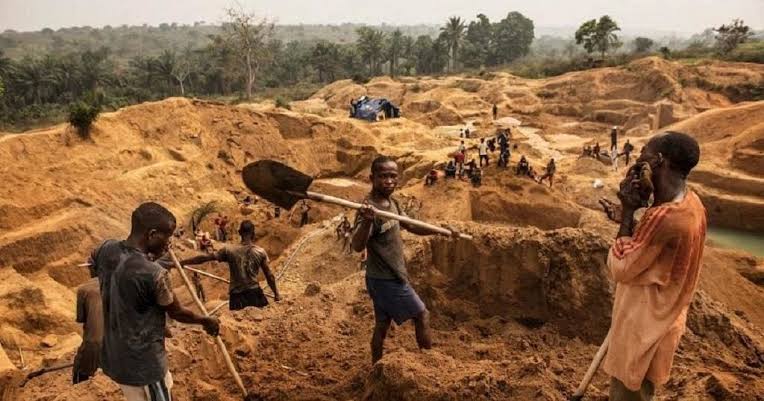
Guinea has launched a major enforcement operation against illegal and environmentally destructive artisanal gold mining in the Siguiri region, announcing a comprehensive ban on mining activities in environmentally sensitive areas and the permanent deployment of defence and security forces to enforce compliance.
The measures, announced on 2 November in a joint communiqué signed by five government ministries, follow field inspections that identified extensive environmental damage caused by unregulated artisanal mining operations. The findings include the destruction of agricultural land and vegetation through the use of heavy machinery, sedimentation and pollution of the Niger River, the Tinkisso River and their tributaries, as well as the use of dredgers and hazardous substances, including mercury, cyanide and explosives.
Under the new measures, mining is strictly prohibited in riverbeds and along riverbanks, agricultural land, grazing areas, protected zones, classified forests, and areas surrounding settlements and public infrastructure. The restrictions are particularly significant for the Niger-Tinkisso wetland system, an internationally important ecological area.
Security-led enforcement and supply chain controls
The government has ordered the permanent deployment of a joint force comprising the armed forces, national gendarmerie, police, customs services and environmental protection officers. Security operations will include round-the-clock surveillance, road and river inspections, and controls at regional entry points to prevent the movement of heavy equipment, dredgers, explosives and chemicals intended for illegal mining.
The authorities have also reinforced controls over gold trading, stipulating that all gold produced in the region must be purchased and sold exclusively through licensed buying offices. Regional and local security commissions will oversee implementation and submit weekly progress reports to the national authorities.
Implications for Guinea's mining sector
The intervention signals a stronger government commitment to formalising artisanal and small-scale gold mining (ASGM), protecting critical water resources and improving regulatory oversight in one of Guinea's established gold-producing regions.
For the mining industry, the measures carry several important implications. First, tighter controls could improve environmental compliance and reduce the reputational and operational risks associated with informal gold production. Second, restrictions on unauthorised gold trading may strengthen traceability and transparency across the domestic gold supply chain, potentially improving alignment with responsible sourcing requirements.
However, sustained enforcement will be critical. The authorities will need to complement security operations with effective licensing mechanisms, designated artisanal mining zones, environmental monitoring and practical pathways for miners to transition into legally regulated operations. Without viable alternatives and consistent institutional oversight, illegal activities could simply relocate to less monitored areas.
The government has emphasised that the measures are not intended to undermine Guinea's gold sector, but to ensure that mineral resources are developed within the country's legal framework and in accordance with sustainable development principles.
The effectiveness of this initiative will ultimately depend not only on enforcement, but also on Guinea's ability to establish a transparent, environmentally responsible and economically viable framework for artisanal gold mining.
Share on social media

-