


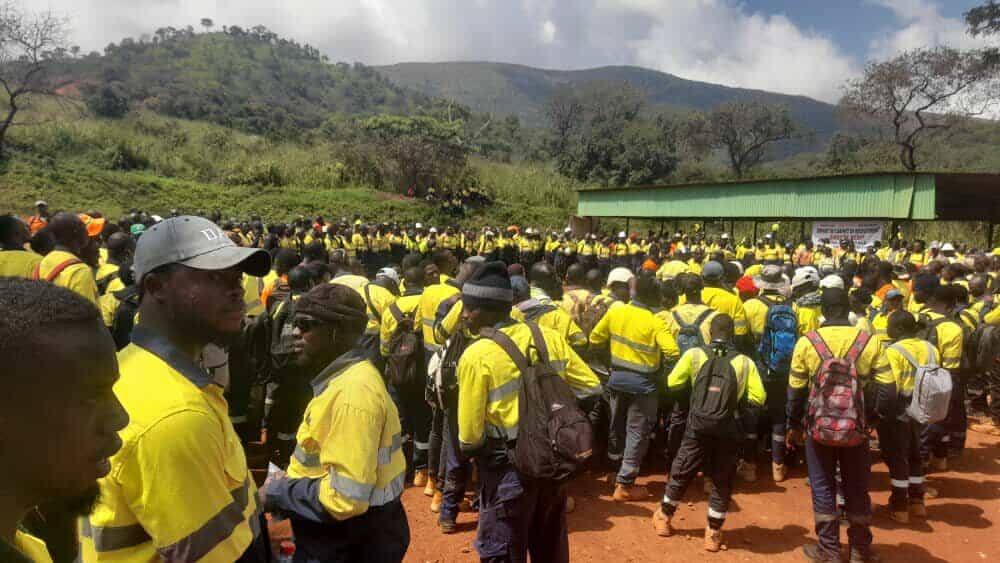
A growing labour dispute in Beyla is drawing significant attention from mining operators active in Guinea’s southeast corridor, where major infrastructure and mining developments are accelerating manpower needs. More than 1,200 workers employed by BCEIP—a Guinean company subcontracting for Portuguese engineering group Mota-Engil—have launched an open-ended strike, alleging poor working conditions, unfulfilled contractual promises, and managerial misconduct.
The protest comes at a sensitive moment, as large-scale mining-linked construction projects around Simandou and associated infrastructure increasingly depend on subcontractor networks to deliver on tight schedules. The unrest highlights deeper risks within Guinea’s labour supply chain that mining companies cannot afford to ignore.
Key Labour Grievances and Pressures on Subcontracting Model
According to union representative Samouka Kandé, the workers were hired by BCEIP to serve Mota-Engil, with an understanding that after six months they would transition to permanent positions within the parent company. Workers now claim this commitment was never honored. Their demands include:
- Immediate termination of BCEIP’s involvement,
- Conversion of all fixed-term contracts (CDD) into permanent contracts (CDI),
- Comprehensive employee care and social coverage,
- A 100% salary increase,
- Guarantees against retaliation, and
- Cancellation of a “demobilization list” allegedly targeting workers for removal.
Beyond contractual concerns, the workers accuse BCEIP of failing to comply with mandatory social protections. Many still lack CNSS registration—an obligation under Guinean labour law—and say they do not benefit from medical insurance despite the high-risk nature of construction work. Such complaints, if confirmed, expose mining contractors and their subcontractors to significant legal and reputational exposure.
The situation worsened after BCEIP’s Director General held a press conference, which workers say “misrepresented their reality” and minimized their complaints. The clash has since moved beyond labour issues to concerns of public credibility and political implications.
BCEIP Denounces a “Defamation Campaign”
Meanwhile, BCEIP founder and CEO, Elhadj Mansa Moussa Sidibé, has pushed back forcefully against allegations circulating on social media. A viral video posted on a Facebook page accused BCEIP of abandoning workers in Beyla and implied the company was fueling discontent against the government. Sidibé dismissed the claims as “a campaign of defamation,” insisting BCEIP has always worked to support youth employment and national development.
The former minister and current member of the National Transitional Council says the accusations are severe enough to endanger the group’s diversified operations—from security services to agribusiness—and intends to pursue legal action.
Sidibé also underscored his long-standing support for President Mamadi Doumbouya, stressing that BCEIP “would never work against the Head of State,” and rejecting any suggestion that the company aims to provoke unrest.
Implications for Mining Companies and Project Delivery
Though the dispute involves BCEIP and Mota-Engil, the ramifications extend to the broader mining sector:
- Heightened Risk of Labour Interruptions
With over 1,200 workers mobilized, prolonged unrest could disrupt construction timelines linked to essential mining infrastructure. Companies relying on multiple layers of subcontractors are particularly exposed. - Increasing Scrutiny on Local Contractors
Mining operators may face growing pressure to audit subcontractors’ compliance with labour laws, CNSS registration, worker housing standards, and medical coverage. Failure to do so could result in regulatory sanctions or local community backlash. - Potential for Social Media–Driven Instability
The viral spread of labour grievances—amplified by accusations of political manipulation—illustrates how quickly disputes can escalate in the digital era. Mining companies must prepare for reputational risks beyond operational concerns. - Government Involvement Likely
Workers are calling for direct intervention from the government and President Doumbouya. This suggests the dispute may soon move into the political arena, increasing the likelihood of regulatory reviews or mandated negotiations.
Strategic Takeaways for Mining Investors
Mining companies operating in Guinea’s infrastructure-heavy regions should view the BCEIP episode as a signal to strengthen oversight of subcontractors, enhance workforce engagement strategies, and ensure full compliance with labour regulations. As the country intensifies its focus on job creation and local content, labour tensions will become a key determinant of project stability.
For mining actors, proactive risk management—rather than reactive crisis response—may prove decisive for maintaining operational continuity in Guinea’s rapidly evolving mining landscape.