


The communities of Kindia, Boke, Beyla, and Siguiri are not footnotes. They are the story.
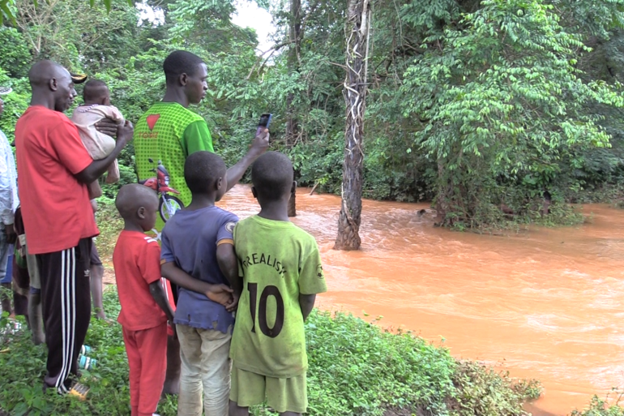
A recent investigation by Al Jazeera journalists Jaume Portell Cano and Nuria Vila Coma has laid bare a truth that many of us in Guinea have long known but rarely seen reported with such clarity: our nation sits atop one of the world's greatest mineral fortunes, and yet the people who live upon that fortune remain among the most forgotten on earth. The village of Bembou Silaty in Telimele prefecture, where an Indian mining company has operated since 2019, offers a portrait that should shake the conscience of every Guinean official. Brown river water. Children falling ill. Farmland swallowed by concessions. Compensation money spent within months, leaving families with neither land nor income.
I write this not as an outside commentator but as a Guinean deeply alarmed by what our government's inaction is costing us — in health, in dignity, and in the moral authority to claim that our mineral wealth serves our people. I address myself particularly to the Ministry of Environment and Sustainable Development, whose mandate exists precisely to prevent the kind of devastation described in that Al Jazeera report — and to ensure that such devastation does not spread to regions like Beyla and Siguiri, where the pressure of extraction is growing but the scrutiny remains thin.
A Ministry With a Mandate It Is Not Fully Using
Guinea's Minister of Environment, Djami Diallo, acknowledged in a recent report — cited by Al Jazeera — that three or four companies in Boké region had their environmental impact assessments rejected for failing to comply with standards. His admission carried a stunning qualifier: "just because companies do not meet the conditions to obtain the compliance certificate does not mean that everything stops." In other words, extraction continues even when companies fail basic environmental tests.
This is not a bureaucratic technicality. This is policy failure with a human face. In Koussadji Dow, a neighbouring village to Bembou Silaty, residents wash their cooking utensils in brown, contaminated river water. Mothers report that their children fall ill. Doctors warn communities not to drink rainwater or river water. If a company cannot meet environmental compliance, its operations must be suspended — not tolerated on the quiet hope that things will eventually improve.
The Ministry of Environment must move from acknowledgment to enforcement. Every non-compliant operation should face real consequences: temporary suspension of extraction, mandatory remediation timelines, and independent monitoring — not just internal review. The Ministry must stop treating compliance certificates as administrative checkboxes and start treating them as the shields they were designed to be for communities like Bembou Silaty.
The Hidden Regions: Beyla and Siguiri Cannot be Left Behind
Al Jazeera investigation, like much reporting on Guinean mining, focuses on the established bauxite heartlands of Kindia and Boké — regions that have at least attracted some international attention and, in the words of the journalists, "notably good" main roads. But Guinea's extractive footprint extends far beyond these regions. In Beyla, in the Forest Region, and in Siguiri in Upper Guinea — where gold has long been extracted under conditions of deep inequality — communities face the same dispossession, the same contamination risks, and the same broken promises of development, with even less visibility.
I call on the Ministry of Environment to expand its monitoring infrastructure beyond the Kindia-Boké corridor. Environmental inspectors must be present in Beyla and Siguiri — not on annual visits, but as permanent, resourced presences. Impact assessments in these regions must be conducted with the same rigour demanded in Boké, and with meaningful participation from local communities who have too often learned of mining decisions only after the excavators have arrived.
What is particularly urgent in these regions is the protection of water sources. Al Jazeera report shows that contaminated water is not an accidental byproduct of mining in Bembou Silaty — it is a predictable consequence of operations conducted without adequate environmental safeguards. Guinea's rivers are the lifeblood of its farming communities. Every mining concession that threatens a watershed should trigger mandatory, independent water quality monitoring, the results of which must be published and accessible to the affected population.
Compensation that Compensates Nothing
One of the most troubling revelations in Al Jazeera report is the fate of land compensation payments. Families in Bembou Silaty received lump sums for their farmland — sometimes the equivalent of five to eleven thousand US dollars — which, while seemingly significant in the moment, evaporated within months. As one resident put it with painful clarity: "No land, no money. They have to start over, from below zero."
This is not compensation. It is a one-time payment dressed as justice. The Ministry of Environment, in partnership with the Ministry of Mines and the Ministry of Social Affairs, must develop a sustainable livelihood framework for mining-affected communities. Compensation must not only account for the current value of land but for its long-term productive value — the harvests that will never be grown, the cashews that will never be sold, the food security that disappears when the land does.
Furthermore, compensation must be accompanied by reinvestment mechanisms: structured savings programmes, agricultural transition support, and community development funds managed transparently at the local level — not disbursed as lump sums and left to circumstance. The women of Bembou Silaty who formed the association they call "Allawalli" — God help us — should not have to appeal to divine intervention for basic economic dignity.
The Value-Added Imperative and What it Means for Sustainability
The government of Mamady Doumbouya has expressed the right instinct: Guinea must process its bauxite domestically, rather than shipping raw ore to be refined and profited from elsewhere. Processing bauxite into aluminium, we are told, can multiply its value by thirty-seven times. This is the direction our country must go. But this economic ambition cannot come at the expense of environmental accountability — in fact, the two must be inseparable.
As Guinea negotiates with investors for refinery construction and expands electricity generation through the Senegal gas partnership, every new industrial agreement must include binding environmental and social standards — not as afterthoughts, but as conditions of licensing. The Ministry of Environment must have a seat at every negotiating table, with the power to insist that communities near future refineries are protected by law, not merely promised protection by company representatives.
We must not repeat in our refinery era the mistakes of our extraction era. The villages near smelting facilities in other parts of Africa have suffered air pollution, soil contamination, and health crises that last for generations. Guinea has the opportunity — and the obligation — to write different terms.
Migration is the Verdict on Our Failures
The Al Jazeera report ends in Spain, specifically in Parets del Valles near Barcelona — a town full of aluminium businesses built partly on ore that left Guinea. Guinean population in Spain has quadrupled since 2000. According to Frontex, the EU border agency, more Guineans arrived in the Canary Islands in 2023 than in the previous thirteen years combined. These are not statistics. These are the sons and daughters of Bembou Silaty, of Boké, of Beyla, of Siguiri — who looked at the land beneath their feet, rich with ore the world desires, and concluded that they had no future in it.
Every young Guinean who climbs into a boat toward the Canary Islands is, in a sense, casting a vote of no confidence in our governance. Migration at this scale is not a cultural phenomenon or an economic inevitability — it is a policy failure made visible. When a country holds the world's largest reserves of one of the most demanded minerals on earth, and its young people still choose to risk death at sea for the chance to work in a carpentry shop in Catalonia, something has gone profoundly wrong with how the wealth of that country is managed.
What Must be Done — Now
I make the following specific demands of Guinea's Ministry of Environment and Sustainable Development:
- Immediately enforce environmental compliance standards. Non-compliant companies must face operational suspension, not merely the withholding of a certificate they seem to operate without anyway.
- Establish permanent environmental monitoring offices in Beyla and Siguiri, with resources and authority equal to those in Kindia and Boke.
- Mandate independent water quality testing near all active mining concessions, with results published publicly in French and local languages.
- Reform land compensation frameworks to replace lump-sum payments with structured, long-term livelihood support programmes co-designed with affected communities.
- Require Ministry of Environment representation in all future mining and refinery investment negotiations, with binding environmental and social conditions as prerequisites for licensing.
Mamadou Aliou, the activist quoted in Al Jazeera report who works for a mining company while fighting for his community, says it with the quiet authority of someone who lives the contradiction every day:
"If you compare the bauxite we export with what we get in return, the difference is enormous. We gain almost nothing. Just enough to survive."
Just enough to survive is not a development strategy. It is not a social compact. It is not what Guinea's Constitution promises its citizens, and it is not what our mineral wealth, if responsibly governed, could provide.
The Ministry of Environment was created to be the guardian of this nation's land, water, and air — and by extension, the guardian of Guinean people who depend on them. It is time to be that guardian in Kindia, in Boke, in Beyla, in Siguiri, and in every community where the ground beneath people's feet has been promised to a company headquartered far away. Our land can generate both wealth and justice. But that will only happen if those charged with protecting it finally decide to do so — without exception, without delay, and without apology.
This opinion article was written in response to Al Jazeera investigation ‘Before, the land sustained us’: Who benefits from Guinea’s bauxite wealth? by Jaume Portell Cano and Nuria Vila Coma