


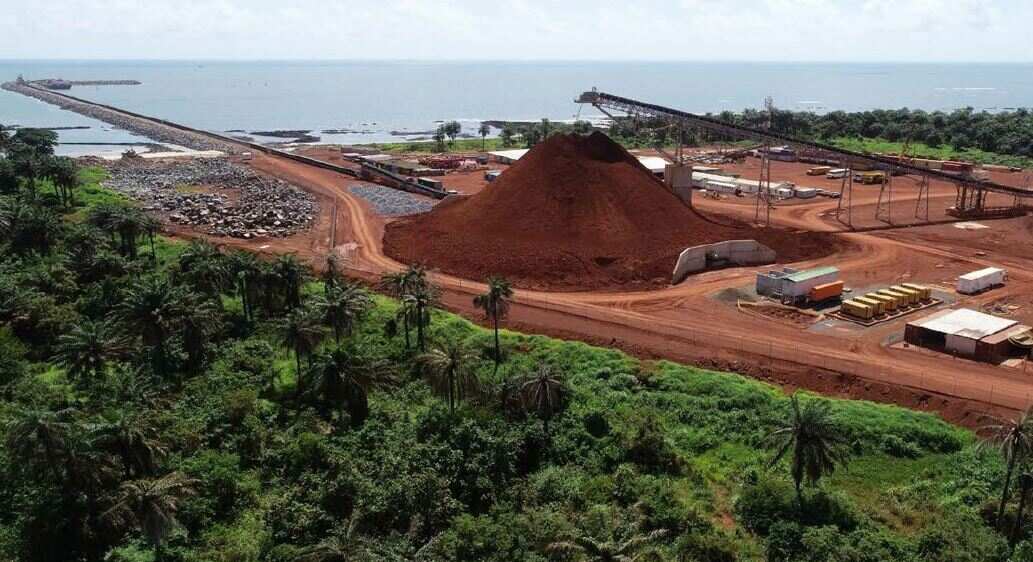
Mining operations at Bel-Air Mining (BAM) in the Boffa prefecture have been temporarily halted, sparking concern among industry observers and local communities. The company’s workers’ union, however, has moved swiftly to clarify that the suspension is not the result of any labor strike or union action, distancing itself from rumors of internal unrest.
In an official declaration, the Syndicat des Travailleurs de Bel-Air Mining stated that the interruption of activities stems from “maneuvers orchestrated by individuals manipulated for personal gain,” rather than any collective labor decision. The union emphasized that it remains committed to maintaining discipline and professionalism among workers, while calling for unity and vigilance against attempts to destabilize operations.
The statement also appealed to local communities in Tougnifily, Douprou, and Mankountan—the three communes most directly affected by the mine—to exercise restraint and reject misinformation. Furthermore, the union urged local authorities to uphold their responsibility in safeguarding peace and stability in the region, particularly as the company works toward restoring normal operations.
This temporary halt adds another chapter to Bel-Air Mining’s turbulent operational history. The company, which began production in 2018 and reached commercial output in early 2019, has previously faced significant market and logistical challenges. In 2021, BAM was forced to suspend operations for nearly two years due to falling bauxite prices, rising freight costs, and a global market oversupply. Operations eventually resumed in early 2023, marking a cautious recovery.
Bel-Air Mining, majority-owned (85%) by Alufer Mining Ltd. with the Guinean state holding the remaining 15%, remains a key player in Guinea’s rapidly expanding bauxite industry. Its mine, strategically located near Boffa’s coastal infrastructure, contributes to the country’s status as the world’s leading bauxite exporter. The project’s development—initiated after the discovery of the deposit in 2011—was underpinned by extensive feasibility, environmental, and social impact assessments before the launch of construction in 2017.
For mining companies operating in Guinea, the Bel-Air episode underscores the importance of maintaining robust stakeholder engagement and social stability, particularly in regions where mining is intertwined with community livelihoods. Internal disputes, misinformation, and political manipulation can quickly jeopardize not only company operations but also investor confidence and local economic development.
Moreover, the case highlights the need for adaptive operational strategies in a volatile global bauxite market. With freight costs and commodity prices remaining uncertain, companies must balance production continuity with financial prudence, while ensuring transparent communication with both employees and host communities.
As of now, Bel-Air Mining’s workforce remains in place, and the union insists that employees continue to perform their duties “with professionalism, discipline, and commitment.” The situation will be closely monitored by industry stakeholders, as the company and local partners work to stabilize operations and safeguard the long-term sustainability of one of Guinea’s flagship bauxite projects.
Guinea Mining Insights will continue to follow developments at Bel-Air Mining and provide updates as the situation evolves.