


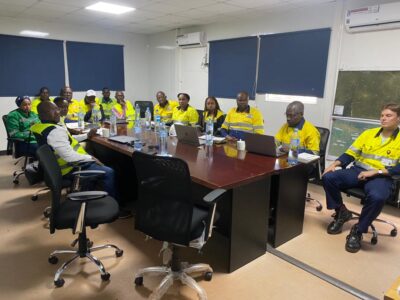
After ten days of complete operational shutdown at the Mota Engil worksite in Beyla, southeastern Guinea, a major labour dispute that threatened to disrupt progress on the strategic Simandou iron ore project has entered a new phase. On Sunday, 23 November 2025, workers recruited by the Guinean firm BCEIP for Mota Engil voted to suspend their strike and resume activities, following a community-brokered dialogue involving local authorities, village elders, and women’s associations.
The decision marks a critical pause in a confrontation that had involved 1,280 skilled and semi-skilled workers—masons, carpenters, steel fixers, and other trades—who walked off the job on 13 November. Their grievances targeted BCEIP, the recruitment and employment intermediary, and centred on demands for direct employment under Mota Engil, the Portuguese construction and engineering firm contracted on works connected to the Simandou project operated by Rio Tinto and partners.
According to union representatives, the suspension is conditional and stems from two key pressures: community mediation and workers’ fear of losing their jobs. The latter became particularly pressing as reports surfaced of potential dismissals and forced evictions of workers from on-site accommodations. To prevent an escalation, community leaders intervened, urging workers to prioritize negotiation over confrontation.
The workers’ conditions for returning to work include:
- Immediate opening of negotiations on all labour claims;
- Protection from retaliation, including immunity from sanctions or dismissals for striking;
- Removal of names from demobilisation lists during ongoing recruitment rounds;
- Reinstatement of all resident workers into their on-site accommodations.
Workers’ demands reflect longstanding frustrations with BCEIP’s labour management practices. Allegations include inconsistent payment of working hours, issuance of fixed-term contracts deemed non-compliant with the Guinean Labour Code, low base salaries, limited access to effective medical care, and a lack of transparency regarding social security and vocational training deductions (CNSS and ONFPP).
The dispute underscores persistent labour governance challenges within Guinea’s fast-growing mining and infrastructure sector. As major international players—such as Mota Engil, Rio Tinto, WCS, Winning Consortium, and others—expand operations in and around the Simandou corridor, labour subcontracting chains remain a recurring point of tension. Workers frequently argue that intermediaries dilute accountability, fragment communication, and contribute to inconsistent application of labour standards.
For investors and operators, the latest episode is a reminder that project timelines, community relations, and labour stability are deeply intertwined. The ten-day shutdown in Beyla, though localized, signals the potential for broader disruptions if labour grievances at the subcontractor level are not systematically addressed.
With work having resumed on Monday, the focus now shifts to whether Mota Engil, BCEIP, and worker representatives can reach a sustainable agreement. A favourable outcome would reinforce Guinea’s commitment to labour stability at a time when the country seeks major capital inflows into its flagship Simandou development.
However, if negotiations stall or retaliatory actions occur, new disruptions cannot be ruled out—an outcome mining stakeholders will be monitoring closely given the strategic weight of Simandou for both Guinea and global iron ore markets.