


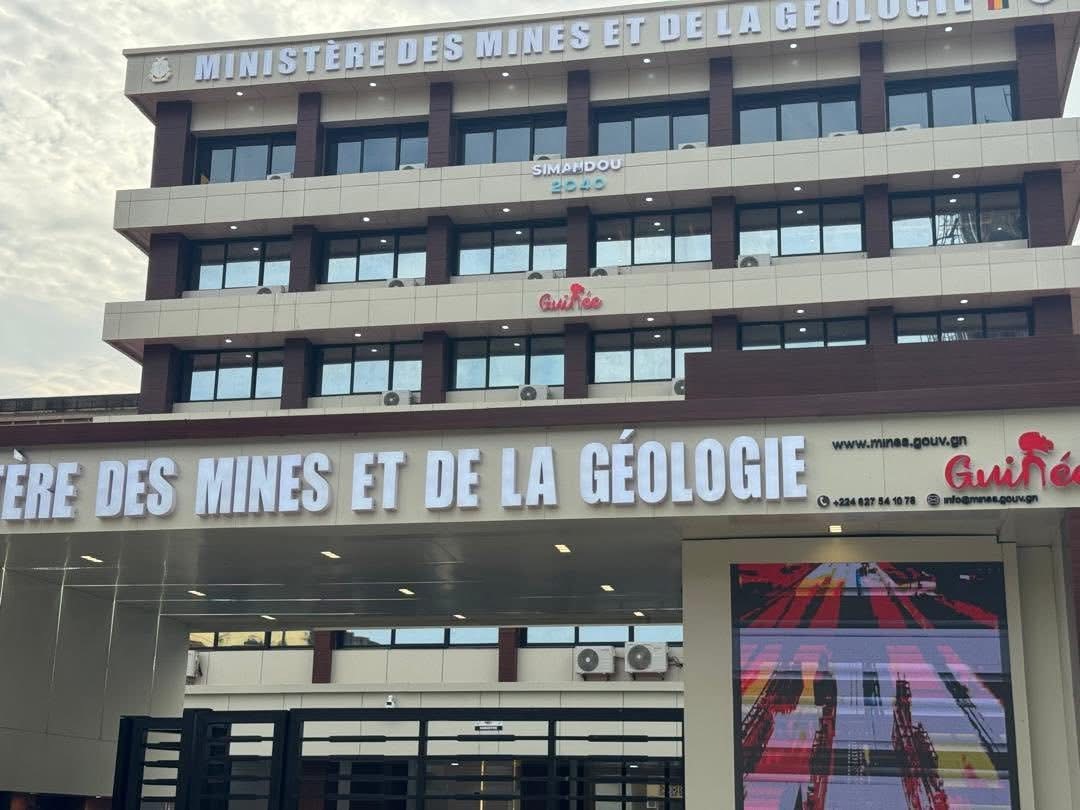
The governance of Guinea’s mining sector faced renewed scrutiny this week following a controversial directive from the Ministry of Mines ordering AGB2A-GIC and SD Mining to remove all equipment from the former Axis Minerals permit area by 10 November 2025. The instruction, issued on 6 November and signed by Secretary-General Aboubacar Kourouma, has deepened uncertainty around the already-complex situation surrounding the revoked Axis license.
For mining companies operating in Guinea, the episode offers sobering insights into regulatory predictability, equity of treatment and risks associated with long-term capital deployment.
A Fractured Consortium and a Contentious Withdrawal
The Axis Minerals industrial exploitation permit was officially withdrawn in May 2025 under Decree D/2025/0067. This action automatically terminated the amodiation agreement held by AGB2A SA, a joint venture originally composed of Guinea International Corporation (GIC) with 58 percent and China’s SD Mining with 42 percent.
However, the dissolution of the AGB2A alliance in March 2022 left two separate operating entities — AGB2A-GIC and SD Mining — both maintaining a presence on the former Axis perimeter. While the permit withdrawal legally required all parties to halt operations, the manner in which subsequent decisions have been implemented has raised concerns about unequal administrative treatment.
AGB2A-GIC claims it has faced systematic barriers since the split. Despite owning one of the most modern port facilities in the region and having invested an estimated 313 million USD in infrastructure, AGB2A-GIC has been unable to evacuate its 6-million-ton bauxite stockpile. By contrast, SD Mining received a special authorization from the Ministry of Mines earlier this year allowing it to clear its bauxite inventory through the Kokaya port on behalf of a little-known Chinese buyer.
This asymmetry in administrative approvals has fueled perceptions of favoritism, now amplified by the latest directive demanding that both companies remove their equipment with almost no notice.
A Directive That Raises More Questions Than Answers
Sector observers note that a mandatory evacuation of equipment is not in itself unusual following the revocation of a permit. However, the haste of the timeline and the lack of a structured, transparent process have raised alarms among investors.
For mining companies, the main questions include:
• Why the urgency? A four-day deadline for the withdrawal of heavy machinery is operationally unrealistic for any industrial operator.
• Where is the transition plan? There is no mention of an independent inventory, joint verification procedures, or coordinated site handover — all standard in responsible mining governance.
• Why were past interventions uneven? The directive provides no explanation for the earlier preferential authorization granted to SD Mining.
These unanswered questions risk weakening investor confidence at a time when Guinea is prioritizing new bauxite and alumina investments under its national industrialization agenda.
The Shadow of the Cancelled MoU
Compounding concerns is the revelation last July of an unpublicized Memorandum of Understanding signed by Mines Minister Bouna Sylla with SD Mining. The MoU sought to reassign the former Axis permit to SD Mining without competitive consultation. Public backlash forced the Minister to cancel the agreement, but the episode continues to cast a long shadow over ministry decision-making.
One industry expert contacted by Guinea Mining Insights described recent actions as “improvised and lacking institutional neutrality,” warning that perceptions of conflict of interest could damage Guinea’s credibility as an investment destination.
Sector Implications and Strategic Takeaways
For mining companies, the Axis permit developments highlight several key strategic considerations:
• Regulatory clarity should be prioritized early in project development, especially when operating through joint ventures or amodiation structures.
• Investment protection mechanisms and exit conditions must be clearly defined to avoid disputes in the event of permit withdrawal.
• Diversification of logistics assets may mitigate operational bottlenecks, particularly when state authorization processes appear uneven.
• Stakeholder engagement remains critical, as transparency gaps can escalate into reputational risk or direct financial loss.
A Need for Institutional Rebalancing
Guinea’s mining sector remains one of the most attractive in West Africa, but recent events underscore the need for strengthened governance to protect both state interests and investor capital. As the dispute around the former Axis permit escalates, stakeholders are calling for a neutral, transparent review of ministerial decisions and a fair resolution for all operators who have committed significant capital to the site.
Mining actors will be watching closely. The outcome will serve as a bellwether for future regulatory stability in the country.