


The mining and metallurgical landscape connecting West Africa to the Arabian Gulf has undergone a fundamental recalibration following the Guinean government’s decisive action against the Guinea Alumina Corporation (GAC), a subsidiary of Emirates Global Aluminium (EGA). For the global community of mining actors and supply chain strategists, the August 2025 revocation and subsequent transfer of GAC’s 690 km² mining concession—holding an estimated 400 million tonnes of bauxite reserves—marks a pivotal moment demanding a thorough analysis of resultant geopolitical risk and supply chain resilience.
The immediate impact on the Gulf Cooperation Council (GCC) aluminium sector, which had relied on Guinea as the backbone of its bauxite supply, is now statistically visible. Through the first ten months of 2025, primary aluminium output across the GCC recorded a notable 2.9 per cent drop, totaling 5,128 thousand tonnes compared to 5,282 thousand tonnes in the same period of 2024. Quarterly production data confirms this trend, with daily output averages settling closer to the 16.7–17.0 thousand-tonne range, a clear contraction from the 17.2–17.5 thousand tonnes seen the year prior. This reduction directly correlates with the disruption that began with the initial suspension of GAC exports in October 2024, citing concerns over unpaid customs duties and delays to a planned alumina refinery.
The revocation of the license, which had historically supported a major exporter (GAC shipped 14 million tonnes in 2023), necessitated immediate and strategic action from key GCC players. The critical case study is EGA’s Al Taweelah alumina refinery in the UAE. The facility, which consistently outperformed its two-million-tonne nameplate capacity, saw its production ease to 1.14 million tonnes in the first half of 2025, down from 1.22 million tonnes in H1 2024.
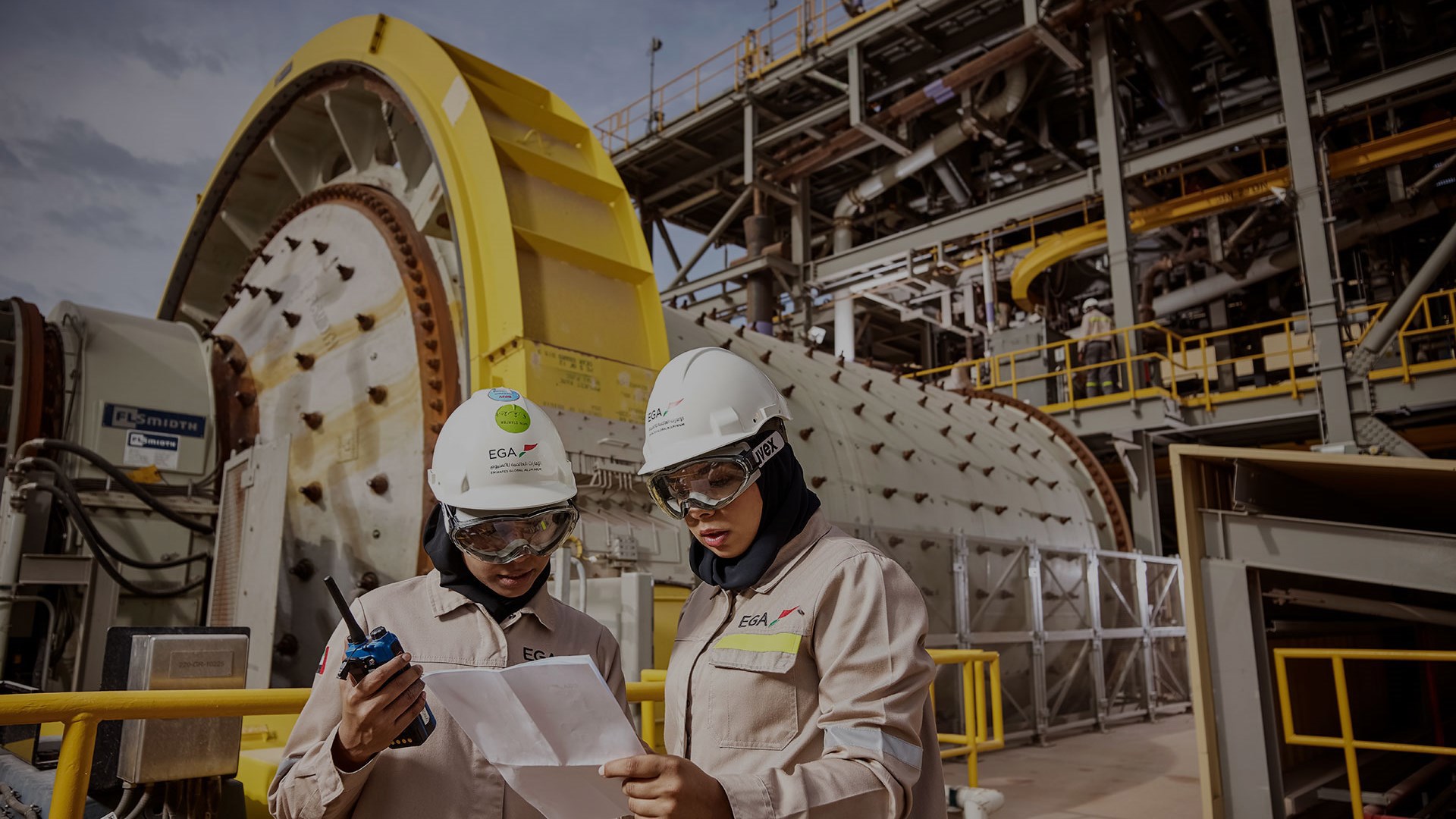
Al Taweelah’s response, however, offers a masterclass in operational agility. To mitigate the supply shock, EGA successfully modified the refinery's operational parameters to accept bauxite from a diversified base of new international suppliers. Concurrently, the refinery pushed forward an internal debottlenecking upgrade, integrating a third ball mill to enhance throughput and minimize unplanned stoppages during the grinding stage. This strategic in-house project, executed over two and a half years without a Lost Time Injury, underlines the commitment to maintaining operational robustness. Furthermore, looking to long-term supply security, EGA cemented a forward-looking agreement with the Ghana Integrated Aluminum Development Corporation, exploring future off-take options and potential cooperation on critical port and rail infrastructure as the Ghanaian industry expands.
On a regional sourcing level, the GCC's bauxite matrix has fundamentally shifted. Prior to late 2024, Australian bauxite was a negligible component of the region’s input mix. In a rapid pivot, Australia became the principal replacement, contributing approximately 2.9 million tonnes to GCC-linked supply routes in early 2025. While China remains the primary destination for most Australian exports, this redirection of demand highlights a tangible increase in supply-side flexibility.
In parallel, Turkey’s role has expanded significantly. Having exported around 4.3 million tonnes of bauxite globally in 2024, Turkey provided roughly 45 per cent of the GCC's 356,000 tonnes imported that year. Following the GAC license revocation, GCC buyers, particularly Saudi Arabia, which accounts for 76 per cent of regional consumption, leaned more heavily on this source. Turkey’s exportable volume is anticipated to rise from 3.37 million tonnes in 2024 to an estimated 3.78 million tonnes in 2025, providing a crucial, rapidly available additional route for diversification.
In conclusion, the Guinean government’s move to revoke the GAC concession has proven to be a watershed moment for the GCC’s primary aluminium industry. While the immediate consequences—a measured but real contraction in output—have materialized, the industry has demonstrated significant adaptability. The rapid shift to new input materials, the operational modification of refining capacity, and the strategic securing of future supply via partners like Ghana confirm that the sector is actively managing its transition. The system, though running steadily, no longer rests on a singular supplier. The overarching insight for mining investors and actors is clear: long-term security in critical mineral supply chains is now irrevocably linked to geographical diversification and operational flexibility as a defense against sovereign risk.