


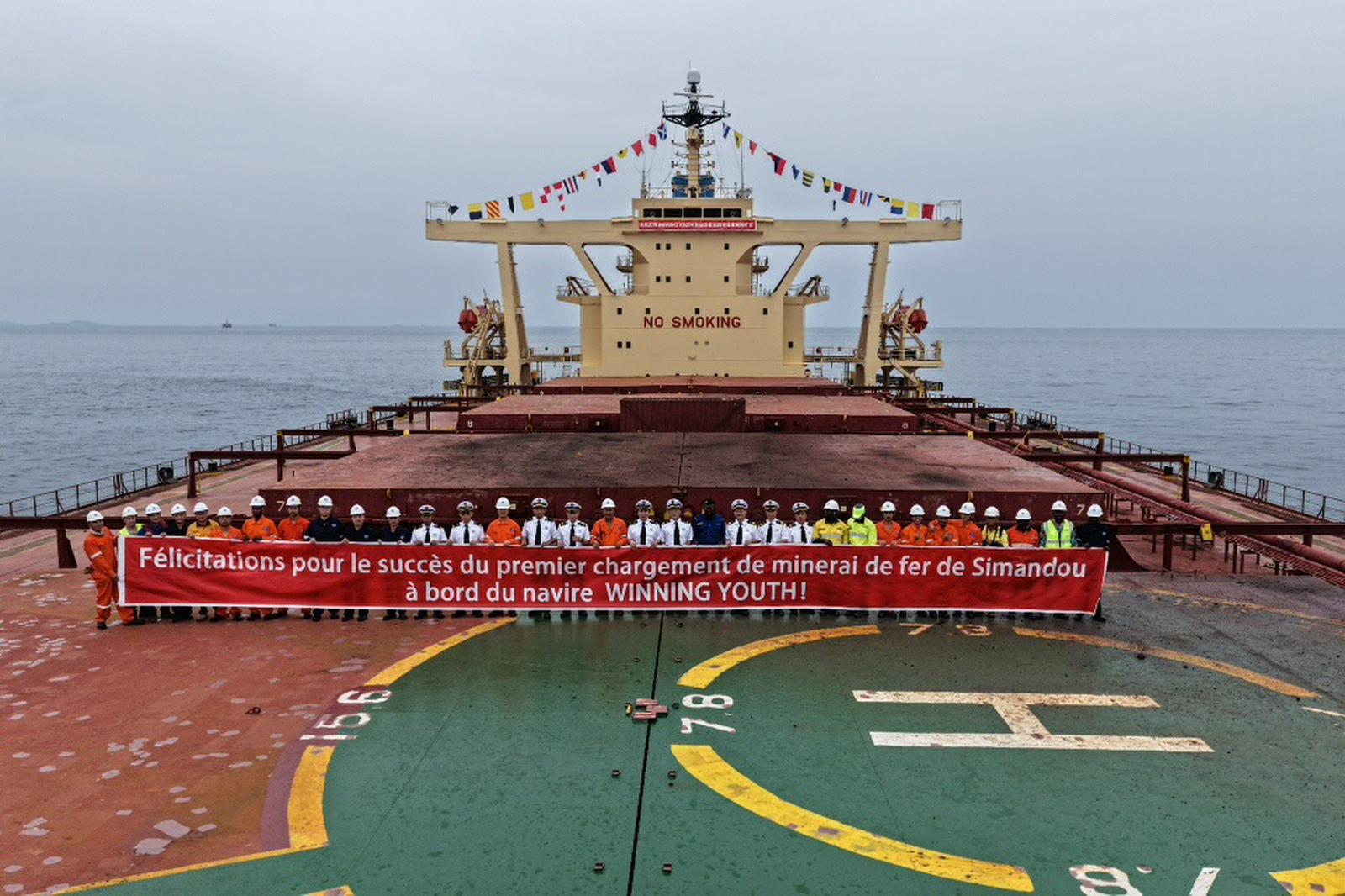
Morebaya, Guinea – In a watershed moment for Guinea's mining sector, the 200,000-tonne bulk carrier MV WINNING YOUTH departed Morebaya anchorage at 17:18 local time on December 2, 2025, carrying the first commercial iron ore shipment from the long-awaited Simandou project. The milestone delivery signals the full operationalization of one of the world's largest undeveloped iron ore deposits and represents a fundamental shift in Guinea's position within global ferrous markets.
Joint Operation Demonstrates Integrated Infrastructure
The inaugural cargo represents a combined export from Winning Consortium Simandou (WCS) and Rio Tinto Simfer, the two mining consortia developing separate blocks within the Simandou concession. The seamless loading operations at Morebaya port underscore the operational maturity of the integrated mine-rail-port-shipping chain that has been years in development.
Industry observers note that the coordinated export between competing consortia—unusual in major mining projects—demonstrates sophisticated logistics planning and may set a template for future operations. The port's handling capacity and vessel assistance capabilities during this maiden shipment will serve as critical benchmarks as production ramps up.
Strategic Implications for Global Iron Ore Markets
Simandou's entry into production carries significant implications for seaborne iron ore trade dynamics. The project's reserves, estimated at over 2 billion tonnes of high-grade hematite ore (typically 65-67% Fe), position Guinea to become a major supplier to steel mills seeking premium-grade feedstock. This timing proves particularly relevant as the global steel industry faces increasing pressure to reduce carbon emissions, with high-grade ore requiring less energy for processing.
The shipment's departure comes as Chinese steelmakers, the primary destination market, actively seek to diversify supply sources beyond the Australia-Brazil duopoly that has dominated seaborne trade for decades. Simandou's West African location offers logistical advantages to both Asian and European markets, potentially reshaping traditional trade flows.
Operational Ramp-Up and Production Outlook
While the 200,000-tonne maiden cargo represents a symbolic achievement, market participants will closely monitor production ramp-up trajectories. The Simandou blocks are collectively targeting annual production exceeding 100 million tonnes at full capacity, which would represent approximately 6-7% of current global seaborne iron ore trade.
The statement's reference to "reinforcing mining and logistics performance" in coming months suggests operators are entering the critical ramp-up phase where operational reliability, rail capacity utilization, and port throughput efficiency will be tested. Achieving nameplate capacity typically requires 18-24 months of systematic optimization in projects of this scale.
Infrastructure Achievement and Precedent
The successful first shipment validates the massive infrastructure investment undertaken, including the 650-kilometer Trans-Guinean Railway connecting Simandou to the newly constructed deepwater port at Morebaya. This integrated infrastructure development, estimated at over $15 billion, represents one of Africa's largest mining-related capital projects in recent decades.
The achievement also demonstrates Guinea's capacity to deliver complex, multi-stakeholder mining projects despite challenging development timelines and previous false starts spanning two decades. For international mining investors, this operational proof point may accelerate interest in Guinea's broader mineral endowment, including significant bauxite, gold, and diamond resources.
Socioeconomic and Environmental Considerations
Project stakeholders emphasize contributions to Guinea's economic transformation through value creation and strategic positioning. However, mining industry observers will monitor how revenues translate into sustainable development outcomes, infrastructure improvements, and local content development—critical factors for maintaining social license to operate.
The reference to supporting "green transition in the global steel chain" acknowledges growing pressure on mining operations to demonstrate environmental credentials. Simandou's operators will face scrutiny regarding energy sources for operations, water management practices, and biodiversity protection measures in the ecologically sensitive Simandou Range.
As Simandou transitions from development to operational phase, consistent execution, supply reliability, and stakeholder management will determine whether this historic first shipment marks the beginning of Guinea's sustained emergence as a tier-one iron ore producer.