


Industry-first battery-electric technology testing in Western Australia offers strategic framework for Guinea's emerging iron ore operations
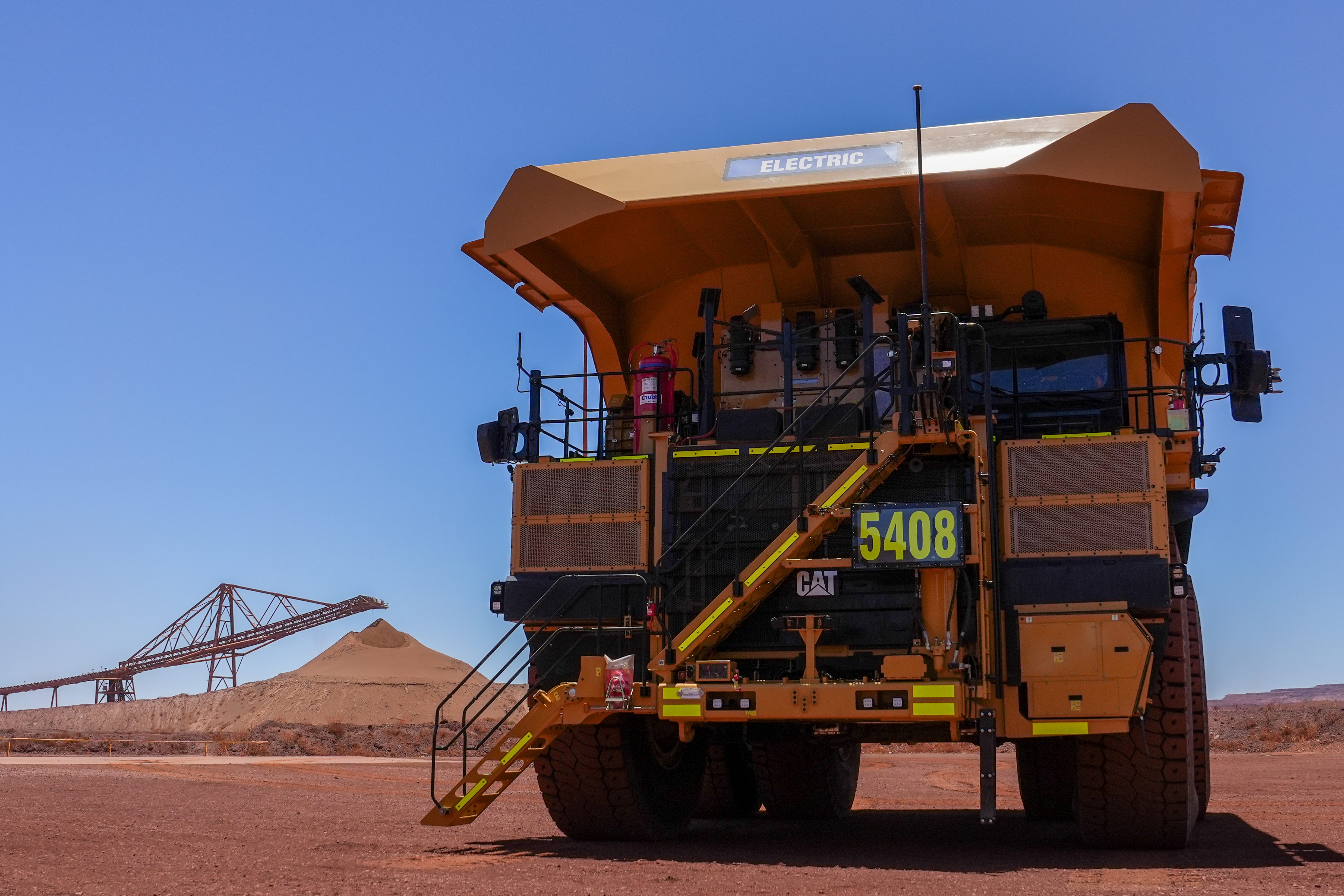
The arrival of Caterpillar's first Cat 793 XE Early Learner battery-electric haul trucks at BHP's Jimblebar mine in Western Australia's Pilbara region marks a watershed moment for global iron ore mining operations. This industry-first collaboration between BHP, Rio Tinto, and Caterpillar to trial zero-emission heavy haulage technology holds particular significance for Guinea's ambitious Simandou Iron Ore Project, potentially offering a technological roadmap for one of the world's largest undeveloped iron ore deposits.
Pilbara Technology Framework
The deployment of two battery-electric haul trucks in December 2025 represents more than a simple fuel substitution exercise. These vehicles utilise sophisticated lithium-ion battery architectures engineered to deliver equivalent performance to diesel counterparts whilst eliminating direct operational emissions. The technology incorporates regenerative braking systems that capture kinetic energy during downhill operations, a feature particularly relevant for mining operations involving significant elevation changes—a characteristic shared by both Pilbara and Simandou operations.
The vehicles maintain payload capacities equivalent to diesel alternatives (220-400 tonnes) whilst offering instantaneous maximum torque delivery from zero RPM. Projected energy consumption sits at 2-3 kWh per tonne-kilometre, with charging durations of 30-60 minutes achieving 80 percent battery capacity. Operational range estimates suggest 4-8 hours of continuous operation per charge cycle, though these specifications require validation through ongoing Pilbara trials.
Infrastructure Requirements: Lessons for Simandou
The infrastructure transformation required for electric mining operations extends substantially beyond charging station installation. Mining operations must redesign electrical distribution systems, implement specialised maintenance protocols, and establish new operational scheduling frameworks. Each charging installation demands 2-5 MW of electrical capacity, necessitating grid capacity expansion and substation modifications that represent high implementation complexity.
For Simandou, currently in advanced development stages, this infrastructure requirement presents both challenges and opportunities. Unlike established Pilbara operations requiring retrofitting of existing infrastructure, Simandou developers could integrate electric haulage considerations into greenfield project design. This approach potentially reduces implementation complexity and capital expenditure compared to brownfield conversions.
The Simandou project's remote location in Guinea's southeastern highlands, approximately 650 kilometres from the proposed port at Matakong, introduces unique infrastructure considerations. Regional grid capacity development would require substantial investment, though the project's scale—targeting 120-150 million tonnes per annum at full capacity—could justify dedicated renewable energy generation facilities integrated with charging infrastructure.
Economic Viability Assessment
Preliminary economic analysis from Australian operations suggests compelling cost advantages for electric systems. Traditional diesel operating costs range from $400,000-600,000 annually per vehicle, whilst electric systems project $150,000-250,000 in annual operating costs when utilising renewable energy sources. Maintenance cost reductions of 30-40 percent for electric drivetrain systems further enhance economic viability, though infrastructure investment amortisation adds an estimated $100,000-200,000 annually per vehicle over a ten-year payback period.
For Simandou, economic calculations require careful consideration of Guinea's specific operating environment. Diesel fuel logistics to remote mining sites incur substantial transportation costs, potentially enhancing the relative economic advantage of electric systems. However, initial infrastructure capital requirements could prove significant, particularly given the project's massive scale and requirements for potentially hundreds of haul trucks.
The growing emphasis on environmental, social, and governance metrics in commodity markets strengthens the economic case for early electric technology adoption. Steel producers increasingly prioritise suppliers demonstrating measurable environmental performance improvements. Simandou's positioning as a next-generation, responsibly-developed iron ore project could secure commercial advantages through early electric haulage implementation.
Technical Challenges in Guinean Operating Environment
Guinea's tropical climate presents distinct technical considerations compared to Pilbara's hot, arid conditions. The Pilbara trials focus on battery performance at temperatures exceeding 45°C with significant dust infiltration. Simandou's environment involves high temperatures during dry seasons combined with substantial rainfall during monsoon periods, requiring different thermal management and environmental protection strategies.
Battery performance in extreme environments represents a critical challenge category. Temperature management, environmental resistance to both dust and moisture, performance degradation over extended operational periods, and thermal stress management during high-demand cycles all require comprehensive solutions. Simandou developers would benefit substantially from Pilbara trial outcomes addressing these environmental resistance parameters.
Operational integration requirements pose additional challenges. Shift scheduling modifications coordinating operational schedules around charging requirements, backup power systems ensuring continuous operations, safety protocol development for high-voltage electrical systems, and emergency response planning all demand careful implementation. The collaborative approach demonstrated by BHP and Rio Tinto, sharing risks and accelerating learning curves, offers a strategic model applicable to Simandou's multi-stakeholder development framework.
Strategic Implementation Pathways for Simandou
Tim Day, BHP Western Australia Iron Ore Asset President, emphasised that replacing diesel involves "reimagining how we operate and creating the technologies, infrastructure and supply chains to transform mining operations." This comprehensive transformation approach proves particularly relevant for Simandou's development trajectory.
Simandou developers could consider phased implementation strategies, beginning with shorter haul routes within the mine site before expanding to longer-distance ore transportation. The project's planned railway infrastructure to Matakong port positions it well for electric traction systems, potentially creating an integrated electric transportation network encompassing both mine site haulage and rail transport.
Andrew Wilson, Rio Tinto Iron Ore Pilbara Mines Managing Director, noted that "no single company can achieve zero-emissions haulage independently, requiring whole-industry collaboration." For Simandou, this principle suggests opportunities for collaborative technology development among project stakeholders including Rio Tinto, the Winning Consortium Simandou, and Guinean government entities.
Regulatory and Workforce Development Considerations
Successfully implementing battery-electric haul trucks requires developing appropriate regulatory frameworks and workforce capabilities. Guinea's mining sector would benefit from establishing safety standards and operational guidelines for high-voltage mining equipment, drawing upon Australian regulatory developments emerging from Pilbara trials.
Workforce development programmes establishing training initiatives for electric vehicle maintenance and operation represent crucial implementation prerequisites. Specialised technician availability for high-voltage electrical maintenance in remote locations requires proactive capability development, potentially through partnerships with equipment manufacturers and international training providers.
Environmental and Social Benefits
Battery-electric technology eliminates direct emissions at operational points, projecting reductions of 500-800 tonnes of CO₂ per vehicle annually alongside 95 percent decreases in local air pollution and 10-15 decibel improvements in operational noise levels. For Simandou, operating in environmentally sensitive areas adjacent to Guinean forest regions, these environmental benefits strengthen social licence to operate whilst supporting national climate commitments.
Improved air quality from eliminating diesel combustion reduces respiratory health risks for mining personnel—a significant social benefit for Guinea's emerging mining workforce. Noise reduction improvements similarly benefit both workers and surrounding communities, addressing common concerns in mining development contexts.
Outlook and Strategic Implications
The Pilbara trials provide invaluable insights applicable to Simandou's development trajectory. Successful trial completion could accelerate adoption timelines, potentially positioning Simandou as a showcase for next-generation, low-emission iron ore production. Australian mining companies' leadership in clean technology implementation offers technological expertise transferable to Guinean operations, potentially through equipment supply partnerships or technical advisory arrangements.
The convergence of electric powertrains, autonomous operation capabilities, and renewable energy integration represents comprehensive mining sector transformation. For Simandou, still in development phases, early consideration of these technologies could establish the project as a global benchmark for responsible, technologically advanced iron ore production.
The success of battery-electric haul trucks in Pilbara conditions will ultimately determine broader industry adoption patterns. Guinea's mining sector, and Simandou specifically, stands positioned to capitalise on these technological developments, potentially leapfrogging traditional diesel-dependent mining models to establish world-leading operational standards from project inception.