


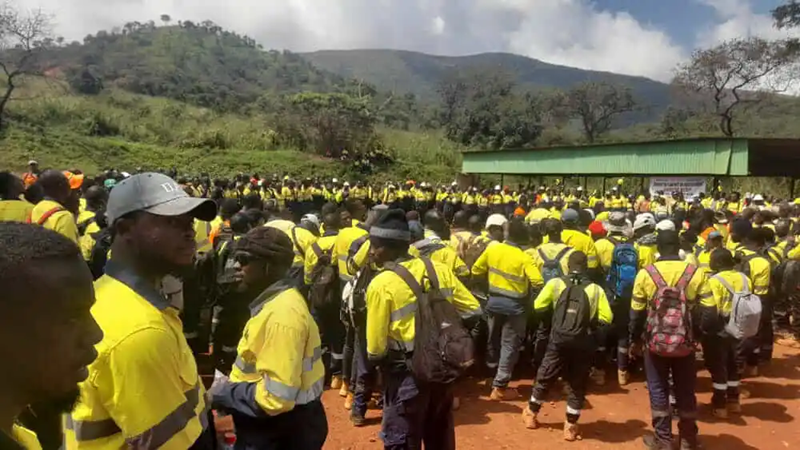
Beyla, Guinea – Construction activities at the multi-billion-dollar Simandou iron ore project remain paralysed as approximately 1,500 workers employed by recruitment agency BCEIP continue industrial action that began on 13 November 2025. The strike threatens to impact critical earthworks and construction schedules for Portuguese contractor Mota Engil, whose operations form part of the infrastructure development for Africa's largest greenfield integrated mine and infrastructure project.
Strike Dynamics and Workforce Grievances
The industrial action involves skilled tradesmen including masons, carpenters, welders, and construction workers recruited by BCEIP (Bureau de Consultation, d'Enquêtes, d'Intérim et de Perfectionnement) to support Mota Engil's earthworks, construction, and production activities at the Simandou site. The workers' demands centre on a fundamental restructuring of employment arrangements, specifically requesting either the departure of BCEIP or direct transfer of employment to Mota Engil.
Two mediation sessions conducted this week under the supervision of Beyla Prefecture authorities and municipal representatives have yielded no tangible progress, with both parties maintaining entrenched positions. BCEIP management reportedly requested work resumption pending further negotiations, but union representatives rejected this proposal following consultation with their membership. A union official indicated that workers remain resolute in their position, refusing any engagement with BCEIP until their core demands are addressed.
Operational and Strategic Implications
The timing of this labour disruption carries particular significance given Simandou's recent operational commencement in November 2024, with the project now in its critical ramp-up phase. The project targets production of 60 million tonnes per annum from SimFer operations by 2028, whilst the combined Simandou development aims for 120 million tonnes annually once fully operational.
Mota Engil maintains an established presence in Guinea's mining sector, having previously executed contracts at the Siguiri gold mine. The company's involvement in Simandou represents a significant component of the infrastructure construction required to unlock the deposit's potential. Any prolonged work stoppage could impact construction timelines for facilities supporting the 600-kilometre trans-Guinean railway and associated port infrastructure.
Labour Management Structures in Large-Scale Mining Projects
The dispute highlights inherent tensions in multi-tiered employment arrangements common to major mining developments. The use of recruitment agencies and labour brokers creates contractual complexity that can generate workforce dissatisfaction, particularly regarding employment terms, benefits administration, and career development pathways. Workers' specific grievances reportedly include inadequate social security registration (CNSS cards) and insufficient medical coverage despite high-risk work environments.
The insistence on direct employment by principal contractors rather than through intermediary agencies reflects broader labour market dynamics in African mining sectors, where workers increasingly seek direct engagement with international firms perceived to offer superior terms and conditions.
Industry Context and Outlook
Simandou hosts estimated reserves of 2.4 billion tonnes grading 65 percent iron content, positioning it as one of the world's premium iron ore assets. The project's successful execution remains critical to Guinea's economic transformation strategy and to global iron ore supply chains increasingly focused on high-grade feedstock for low-emission steelmaking technologies.
The labour disruption underscores operational risks inherent in mega-projects executed in challenging jurisdictions, where workforce management, regulatory compliance, and stakeholder relations require careful navigation. Resolution of this dispute will likely influence future labour relations across Guinea's expanding mining sector, potentially establishing precedents for employment structures in comparable large-scale developments.
Local authorities continue mediation efforts, though the union's stated position suggests resolution may require substantive concessions regarding employment arrangements. The outcome will be closely watched by mining industry participants across West Africa as an indicator of evolving labour relations dynamics in resource sector mega-projects.