


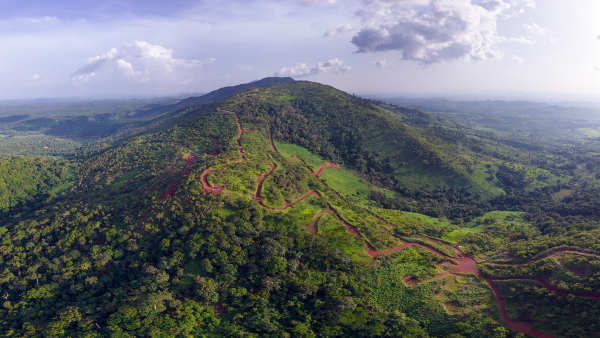
Operations at Guinea’s flagship Simandou iron ore project have been suspended following a tragic accident that claimed the lives of three foreign workers at a Winning Consortium Simandou (WCS) site in Kerouane province. The company confirmed the fatalities and announced a full suspension of activities pending a comprehensive safety review.
The incident, which occurred late last week, adds to a growing list of fatalities at the world’s largest untapped iron ore deposit. Since November 2023, at least 14 workers have lost their lives during the construction of the mine, railway, and port infrastructure linked to Simandou. The government has launched a formal investigation amid mounting concerns over worker safety and regulatory oversight.
WCS—responsible for developing Blocks 1 and 2 of the project—stated that emergency protocols were immediately activated and that it is providing support to the victims’ families. The company emphasized that operations will only resume once “safety conditions are fully guaranteed.”
This marks the second fatality-linked suspension at Simandou in less than two months. In August, Rio Tinto and its partner Chinalco temporarily halted work on Blocks 3 and 4 after a contract worker’s death at their Simfer site. These repeated incidents highlight the urgent need for stronger occupational health and safety systems across the project’s multi-operator structure.
Simandou is central to Guinea’s ambition to become a global iron ore supplier. With reserves estimated at 2.8 billion tonnes of high-grade ore (65% Fe), the project is expected to produce up to 120 million tonnes per year once operational—transforming both the national economy and global iron ore markets. However, delays caused by safety stoppages now threaten the November 2025 target for first exports, potentially triggering contractual penalties under agreements with the government.
For mining companies active in Guinea, the Simandou incident underscores a critical lesson: safety cannot be subordinated to production deadlines. Multinational developers must strengthen contractor management, enforce international HSE standards, and embed continuous safety training at all levels.
As Guinea’s authorities intensify oversight of mega-projects, adherence to Environmental, Social, and Governance (ESG) principles is becoming a prerequisite for operational continuity. The Simandou tragedy, while deeply regrettable, may serve as a turning point for the country’s mining industry—prompting both government and investors to recalibrate priorities toward sustainable, safe, and responsible resource development.