


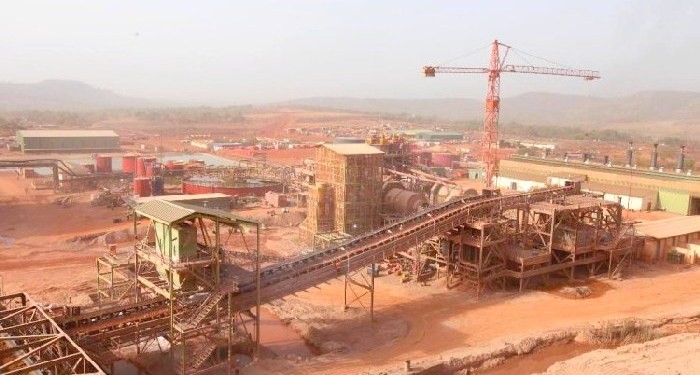
The Société Minière de Dinguiraye (SMD), one of Guinea’s major gold producers, is facing renewed labour tensions after its workers’ union delegation formally filed a ten-day strike notice effective 5 November. The notification, issued under Article 431.3 of the Guinean Labour Code, follows months of unresolved grievances that workers say have gone unanswered by both company leadership and relevant state authorities.
According to the union delegation, repeated alerts and requests for engagement were sent to SMD’s General Management, the local administration and ministerial structures. The union accuses the company of breaching several previously signed agreements and violating regulations governing the employment of foreign labour. The situation highlights broader industry challenges related to workforce governance, localisation policies and the implementation of collective bargaining commitments.
The union lists several priority concerns. At the forefront is the alleged non-execution of commitments agreed upon in previous negotiations. These include potable water supply upgrades, service vehicles for the on-site clinic and the union delegation, transparency around “hidden” or unregularised jobs, procurement of worker transportation buses and the construction of promised social and sports infrastructure. Such expectations reflect the increasingly comprehensive social packages that Guinean mineworkers consider standard, especially within industrial gold operations.
The reinstatement of Souleymane Tounkara, a dismissed union delegate, is also a central demand. Workers claim the dismissal contradicts decisions already made by the Ministry of Labour’s General Inspectorate and the Court of First Instance of Siguiri. This dispute raises sensitive issues around disciplinary processes, labour rights and compliance with legal rulings, all of which can influence a company’s social licence to operate.
Another element of contention relates to the management of union-related revenue streams, particularly scrap metal allocations traditionally used to finance collective worker activities. The union alleges these benefits have been diverted away from their intended purpose.
Finally, the workers are pressing for implementation of the new sectoral job classification grid and wage scale adopted under the Mining Collective Agreement of 14 February 2025. This new framework is expected to harmonise pay structures across the industry, reduce disparities and address worker expectations at a time when inflation and cost-of-living pressures remain high in mining regions.
During a general assembly held on 9 October in Fayalala, SMD workers unanimously mandated their union to proceed with the strike notice if their concerns remained unresolved. The unanimity signals rising worker frustration not only at SMD, but also potentially across Guinea’s mining workforce, where expectations around labour relations, local development and compliance have grown significantly in recent years.
For mining companies operating in Guinea, the SMD dispute offers several important insights:
- The cost of unimplemented agreements is rising. Workers and unions are increasingly organised and document-driven. Failure to deliver on signed commitments can quickly escalate into legal and operational risks.
- Local workforce compliance requires stronger systems. Regulatory rules on foreign labour quotas and job localisation are receiving closer scrutiny. Transparent human-resources processes are becoming essential to maintaining credibility with authorities and host communities.
- Social infrastructure remains a major factor in labour stability. Basic services such as water access, transportation and worker facilities continue to shape workforce morale and productivity. These are no longer viewed as optional community add-ons but as core obligations.
- Judicial alignment is crucial. Decisions from state labour institutions are increasingly enforceable, and companies risk reputational and regulatory consequences if they disregard them.
- Dialogue remains the most effective mitigation strategy. Notably, the SMD union emphasises its commitment to social peace and expresses openness to negotiation. This underscores that communication failures, rather than irreconcilable positions, often drive conflict.
As SMD and its workers enter a critical window for negotiations, the outcome will be closely monitored by mining stakeholders across Guinea. For the wider sector, the case serves as a reminder that mining competitiveness today relies as much on operational efficiency as on proactive, credible and transparent labour engagement.