


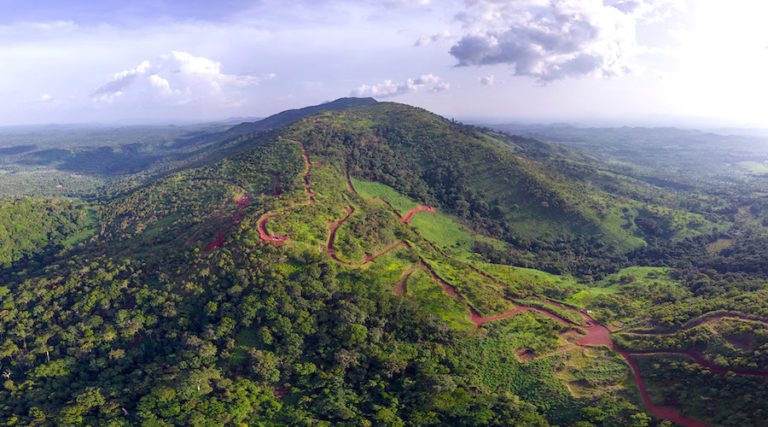
Winning Consortium Simandou (WCS), developer of Blocks 1 and 2 of the world-class Simandou iron ore project, has reaffirmed its commitment to responsible mining and sustainable community engagement following renewed environmental concerns from civil society organizations.
Recent findings by Advocates for Community Alternatives (ACA), a non-governmental organization, linked the ongoing construction activities at Simandou to water and soil contamination, as well as damage to coastal settlements near the new ore shipment port. Samples collected reportedly showed high acidity and bacterial presence in local waterways, raising concerns over potential long-term ecological impacts.
In response, WCS stated that it is “working closely with authorities and communities to address environmental concerns” and is fully aligned with Guinean environmental regulations and international best practices. “Winning Consortium Simandou is committed to developing the project responsibly,” the company said, emphasizing that its objective remains to ensure the project delivers “sustainable and inclusive benefits for the Guinean people.”
Simandou, located in southeastern Guinea, is regarded as the world’s largest untapped high-grade iron ore deposit, estimated to hold over 2 billion tonnes of ore. The project, divided into four development blocks, is being advanced jointly by major international players. WCS, backed by a consortium of Chinese companies including China Baowu Steel Group, leads development on Blocks 1 and 2, while Rio Tinto and Aluminum Corporation of China (Chinalco) oversee Blocks 3 and 4.
Rio Tinto also reaffirmed its adherence to high environmental standards, stating that it is “fully committed to minimizing the impacts of our operations through preventive, mitigation, and compensation measures, in full compliance with national legislation and international standards.”
For mining stakeholders, Simandou represents both a transformative opportunity and a challenge. As global steelmakers seek cleaner and higher-grade iron ore, Guinea’s deposits could play a critical role in future supply chains. However, companies involved must demonstrate robust environmental management and transparent engagement with affected communities to maintain their social license to operate.
The Guinean government is expected to intensify oversight of environmental compliance at Simandou, recognizing that responsible development of this strategic resource is key to national growth and investor confidence. For mining firms operating in Guinea, the WCS and Rio Tinto responses highlight the growing importance of proactive ESG (Environmental, Social, and Governance) performance in securing long-term project viability.