


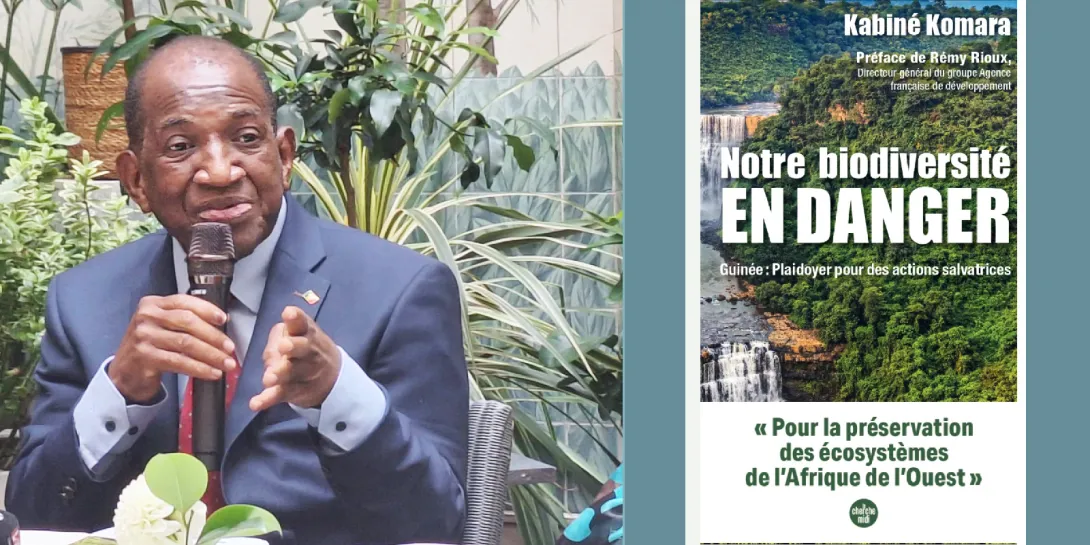
As Guinea advances ambitious industrial projects such as Simandou and consolidates its position as a global mining powerhouse, former Prime Minister Kabiné Komara has issued one of the most forceful environmental warnings heard in years. In his new book Notre biodiversité en danger and in a recent interview, Komara urges national leaders, mining actors, and development partners to prepare a long-term strategic plan to save Guinea’s biodiversity—a natural capital he argues is now at a critical tipping point.
For the mining industry, this call comes at a decisive moment. Guinea is expanding bauxite output at record levels, opening new industrial corridors, and fast-tracking some of the largest iron-ore, gold, and infrastructure developments on the continent. Yet Komara cautions that without stronger environmental governance, such growth risks undermining the very ecosystems that sustain Guinea’s water resources, agriculture, and human wellbeing.
The Château d’Eau Under Threat
Guinea is traditionally referred to as the “château d’eau” of West Africa. Its highlands give birth to more than 1,200 rivers and 23 river basins, including 14 transboundary systems that supply the Senegal, Niger, and Gambia rivers. Together, they provide 75–80 billion cubic meters of freshwater annually to neighbouring countries.
Komara warns that this strategic hydrological role is now directly threatened by deforestation, unregulated farming, artisanal mining, climatic shifts, and sedimentation. Mining—particularly uncontrolled extraction—figures prominently in his analysis. Degraded watersheds, shrinking river flows, and the destruction of forest cover have already begun to affect downstream communities across West Africa.
For industrial operators, the implication is clear: water security is becoming a growing operational and geopolitical risk. Reduced flows can affect hydropower stations, ore processing facilities, and the viability of large-scale expansion projects. Komara’s warning highlights that environmental degradation is no longer a peripheral concern but a core component of long-term mining sustainability.
A Geological Powerhouse with Ecological Fragilities
Guinea is widely considered a “geological scandal”, hosting:
- 40% of global bauxite reserves
- 10 billion tonnes of high-grade iron ore
- 25–30 million carats of diamonds
- Vast gold, nickel, and cobalt resources
But this same mineral wealth has accelerated pressures on ecosystems. Komara notes that 80–100 million tonnes of bauxite exports annually have created severe environmental impacts in the northwest, including loss of vegetation, dust emissions, and the disturbance of hydrological systems.
He raises particular alarm about artisanal and clandestine gold mining, which uses mercury and cyanide, contaminating soils, groundwater, and rivers. The downstream consequences—fish mortality, polluted drinking water, and increased exposure to toxic substances—present long-term liabilities for both the state and legitimate mining operators.
Biodiversity as a Pillar of Public Health and Stability
Komara links the decline of biodiversity directly to public health risks, citing Guinea’s vulnerability to waterborne diseases and the lessons learned from the Ebola outbreak. The destruction of natural habitats, he stresses, increases the likelihood of zoonotic spillovers and new epidemics—risks that can disrupt mining activities, supply chains, and national stability.
For mining companies increasingly evaluated on ESG criteria, such warnings underscore the importance of integrating biodiversity protection into corporate risk management and social performance strategies.
A Wake-Up Call: Policy Reform and Enforcement
Komara acknowledges recent steps by the government, including:
- Cancellation of over 150 non-compliant mining permits
- A moratorium on artisanal gold mining and timber cutting
- Stronger emphasis on environmental compliance
These measures signal a shift toward stricter oversight—an evolution that mining operators should anticipate as regulatory frameworks tighten.
But Komara argues that isolated actions are not enough. He calls for a comprehensive, long-term national strategy, involving coordinated action across the ministries of environment, mines, agriculture, urbanism, education, research, and finance. This would include updating environmental legislation, strengthening enforcement, and investing in local capacity.
For the mining sector, this translates into an expectation of more rigorous environmental standards, expanded monitoring requirements, and deeper community engagement.
The Strategic Priority for Mining Actors
Komara’s message is unambiguous: Guinea’s long-term economic success—including its mining future—depends on safeguarding its biodiversity and water systems today.
Mining investors should view his warning not as an obstacle, but as a call to modern, responsible mining practices:
- Enhanced watershed protection
- Mine planning that integrates ecosystem services
- Reduced land disturbance and progressive rehabilitation
- Support for scientific research and local conservation initiatives
- Transparent engagement with riverine communities
As Simandou 2040 and other major projects advance, Guinea stands at a crossroads. It can choose a development pathway that balances extraction with conservation—or risk losing the natural heritage that underpins its regional influence and long-term prosperity.
Komara’s alarm, grounded in decades of hydro-diplomacy and mining experience, is ultimately a strategic message: protecting biodiversity is protecting the future of mining in Guinea and the stability of West Africa as a whole.